Monday, February 23, 2026

Muslim Europe and the Curious Case of Amnesia: Winter Gathering 2026

View this email in your browser

RAMADAN 2026

Dates for Your Diary:


Muslim Institute Book Club: 'The Post-9/11 Great American Novel' - starts 25 March 2026. Click here for details. 


********


Winter Gathering 2026

Muslim Europe and the
Curious Case of Amnesia

Friday 27th to Sunday 29th November 2026
Sarum College, Salisbury
 
The 2026 Muslim Institute Winter Gathering confronts a deliberate historical amnesia: the erasure of over a millennium of Muslim presence in Europe and the decisive role Muslim societies and populations played in shaping European civilisation. This is not an obscure academic oversight. It sits at the centre of today's argument about Western decline, contested values and whether Muslims are internal to Europe or permanently alien to it.

Across Europe and North America a powerful narrative claims that Muslim immigration heralds the fatal weakening of Western civilisation and the erosion of its values. This revisionism fuels Islamophobia and "replacement" theories that cast Muslims as a hostile 'fifth column' that must be expelled. Such claims depend on treating Islam as permanently foreign to Europe. The 2026 Gathering will intervene directly in this crucial historical and ideological debate.

Muslim rule in Europe was not an interruption of European advance. It was one of its key historical forms. From the 7th century onward, Muslims colonised, governed and lived across Western and Eastern Europe. In Iberia alone, Muslim rule endured for nearly eight centuries. Within generations, Muslims were European-born and locally rooted.

In 929 CE the Spanish-born Emir ʿAbd al-Raḥmān III proclaimed himself Commander of the Faithful - the political and the religious leader of all the Muslims in al-Andalus, as well as the protector of his Christian and Jewish subjects. Contemporary accounts describe him as fair-skinned, blue-eyed and with reddish or blond hair. By heritage, birth, culture and political life, he was a European ruler. He appears foreign only through a later racialisation that coded Islam itself as alien.

History normally allows 'foreignness' to expire. Contemporary European populations in the Americas and Australasia are no longer described as invaders. The descendants of Vikings and Normans who conquered England are considered indigenous. Conquest gives way to settlement, settlement to continuity and continuity to a sense of belonging. However Muslims are denied this transition.

Muslim Europe was also an intellectual engine. Philosophy, medicine, mathematics and law were developed in European cities under Muslim rule. Enlightenment Europe encountered Aristotle and systematic rational inquiry largely through Muslim thinkers. Many values modern Europe claims as its core inheritance — commitment to reason, scientific progress, legal rationality and institutional learning — were shaped within this Muslim European context. To detach those values from that history is to misrepresent how Europe became what it is.

The later erasure of Muslim Europe continues to structure contemporary Islamophobia by presenting Muslims as permanent outsiders. The 2026 Gathering will treat this not only as a dispute about the past, but as a contest over Europe's possible futures.


WG26 will explore the following areas:
- Historical memory and belonging, asking who is permitted to count as indigenous.
- Intellectual inheritance, tracing how Muslim Europe shaped European modernity.
- Narratives of decline, examining how fear of civilisational loss is constructed and mobilized.

- How Muslims tell their own European history to themselves and to their fellow citizens.
- & the future(s) of Europe; considering what a confident European identity grounded in historical truth might look like.


The event is open to Muslim Institute Fellows only. To become a Fellow click here.


************************************************
 

Saliha Sardar Trust for Special Needs Children
 

Last year, Fellows of the Muslim Institute made generous donations to our sister organisation, the Saliha Sardar Trust for Special Needs Children (SST for short). We are very grateful for this support. 


SST was established in the memory of Saliha Sardar, an active member of the Muslim Institute and wife of the founder and trustee, Ziauddin Sardar. The Trust supports special needs children in Brent and Barnet, particularly the school where Saliha worked. Most – we can say almost 90% - of the special needs children in Brent and Barnet are Muslims from refugee background. From Somalia, Sudan, Syria, Palestine, and Afghanistan. The Trust gives small grants between £500 to £2000 to individual children to help purchase much needed equipment, such as wheelchairs, hearing aids, sensory apparatus, or pay for urgently needed therapy.

We are glad to report that with the generous support of Saliha's friends in Muslim Institute and her school, we have managed to raise £172,000. 

During this year, the Trust is providing equipment for special needs children at the Village School in Brent to the tune of £15,000. It includes eye testing machine for the school and other equipment for individual pupils. 

However, there is still some way to go to reach the target of £500,000 to make SST viable for the future. 

We are once again asking for a part of your zakat during this blessed month of Ramadan. If the generosity of last year is repeated, it may be possible for the Trust to reach its target this year. 

The Bank details are as follows: 

Bank: Lloyds Bank
Account Name: Saliha Sardar Trust for Special Needs Children
Sort code: 30-99-50
Account no: 67143863
IBAN: GB36LOYD30995067143863
BIC: LOYDGB21287

www.salihasardartrust.org.uk


************************************************

£100,000 Community Empowerment Fund

Ramadan 2026 Launch


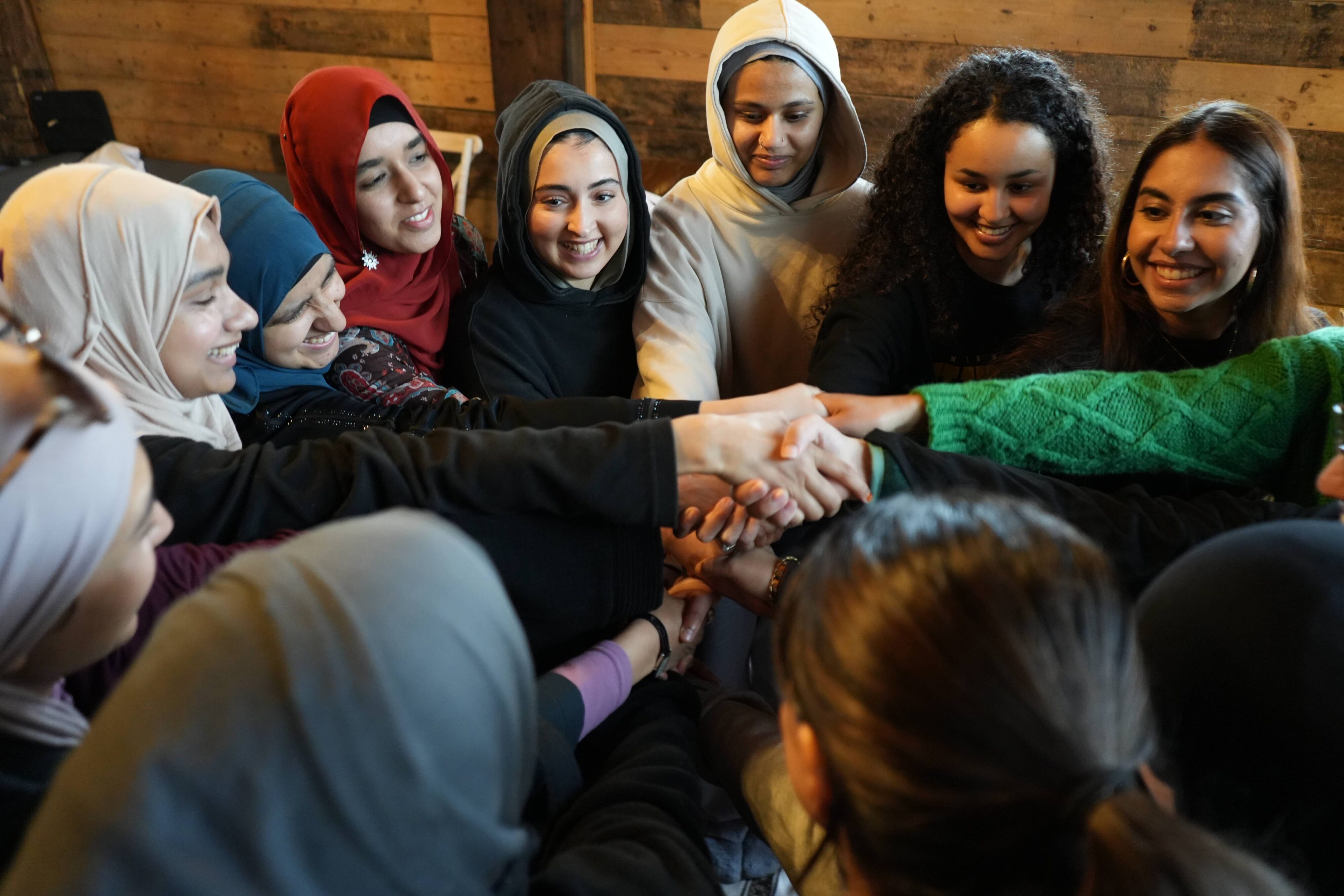
Community Empowerment Fund 2025 The Wholesome Retreat.


Established in 1973, the Muslim Institute has been an independent platform for Muslim thought, debate, and action in Britain. From the outset, it has considered ideas and ideals as inseparable from practice.

Alongside its intellectual work — including the Winter Gatherings, the Ibn Rushd and Ibn Sina lectures, and its quarterly journal Critical Muslim — the Institute has consistently engaged with the practical concerns of British Muslim life. It helped establish institutions that have shaped the community, such as the Muslim Parliament of Great Britain (1992), the Muslim Women's Institute (1991) and the Halal Food Authority (1994).

The Institute has always been willing to address difficult and sensitive issues within the community itself, including forced marriage, domestic violence, so-called 'honour' killings, and child abuse. Its Muslim Marriage Contract (2008), grounded in equality, and its Guideline Report on Child Protection in Faith-Based Environments (2006) reflect a long-standing commitment to dignity, justice, and accountability.

This combination of independent thought and practical engagement has always been central to the Institute's role. We firmly believe that a stronger, healthier and more engaged Muslim community can and will drive positive change and lift their fellow citizens locally and nationally.

In 2023, the Muslim Institute established the Community Empowerment Fund to support educational, research and capacity-building work addressing pressing issues facing British Muslim communities and wider society. Over £25,000 has been invested to date. The Fund sits alongside the Institute's wider activities, helping to resource areas of concern that have long been part of its mission to advance knowledge, informed debate and intellectual engagement.

From 2026, the Institute will allocate a budget of £100,000 to its Community Empowerment Fund. This will be distributed over the next 3–5 years.

We wish to fund educational, research and capacity-building initiatives in three interconnected areas where deeper understanding and informed public engagement are needed: community wellbeing, supporting young people, and defending civil liberties in British Muslim communities and wider society. Allocation will be dependent on our published criteria and the quality of applications.

Community wellbeing, supporting young people, and civil liberties are closely bound together: they highlight the need for communities to advance, to live healthy lives and with dignity, to be heard on their own terms, and to participate in society without fear. Each strand reinforces the others, helping to sustain the conditions in which interdependent, ethical and confident communities can thrive through the development and sharing of knowledge and informed public discussion.

The three strands.

Community Wellbeing: We will seek to support educational and community organisations working to advance understanding of mental health in areas with significant Muslim communities and in wider society. Projects should aim to deliver mental health education and stigma-reduction initiatives, including through engagement with mosques, women's projects and community associations to develop culturally competent and faith-literate approaches to care; Applications from female-led organisations and community groups will be particularly welcome. The Fund does not support the provision of direct clinical or therapeutic services.

Young People: We want to support individuals and organisations advancing the educational, intellectual and civic development of young people from our Muslim communities, particularly those from economically hard-pressed areas and marginalized demographics, such as refugees. Many young people from Muslim backgrounds continue to struggle with a range of barriers and issues, including anti-Muslim bigotry and racism, economic injustice, social isolation, a fragile sense of self and well-being, and a lack of voice and representation in local, regional and national discourses. We want to help projects that provide educational programmes, leadership development, mentoring, and platforms advancing youth voices that help young people discuss and respond to the challenges they face.

Civil Liberties: We will work with UK-based individuals and organisations seeking to uphold civil liberties, human rights and international law, and the right to hold power to account through education and informed public discussion benefiting British Muslim communities and wider society. This may include forums for informed debate, practical workshops, educational and institutional support and working with legal and civil society partners. Where appropriate, support may be provided through the Community Empowerment Fund. The Fund will not support party-political campaigning and all supported activities must remain independent, balanced and educational in character.

What's next: In the spring of 2026 the Muslim Institute will publish more details about the criteria for each stream of funds, the process by which we will decide awards and how the Community Empowerment Fund will be distributed. All funded projects will be required to demonstrate a clear and identifiable public benefit. Please do not contact us with any proposals at this stage.

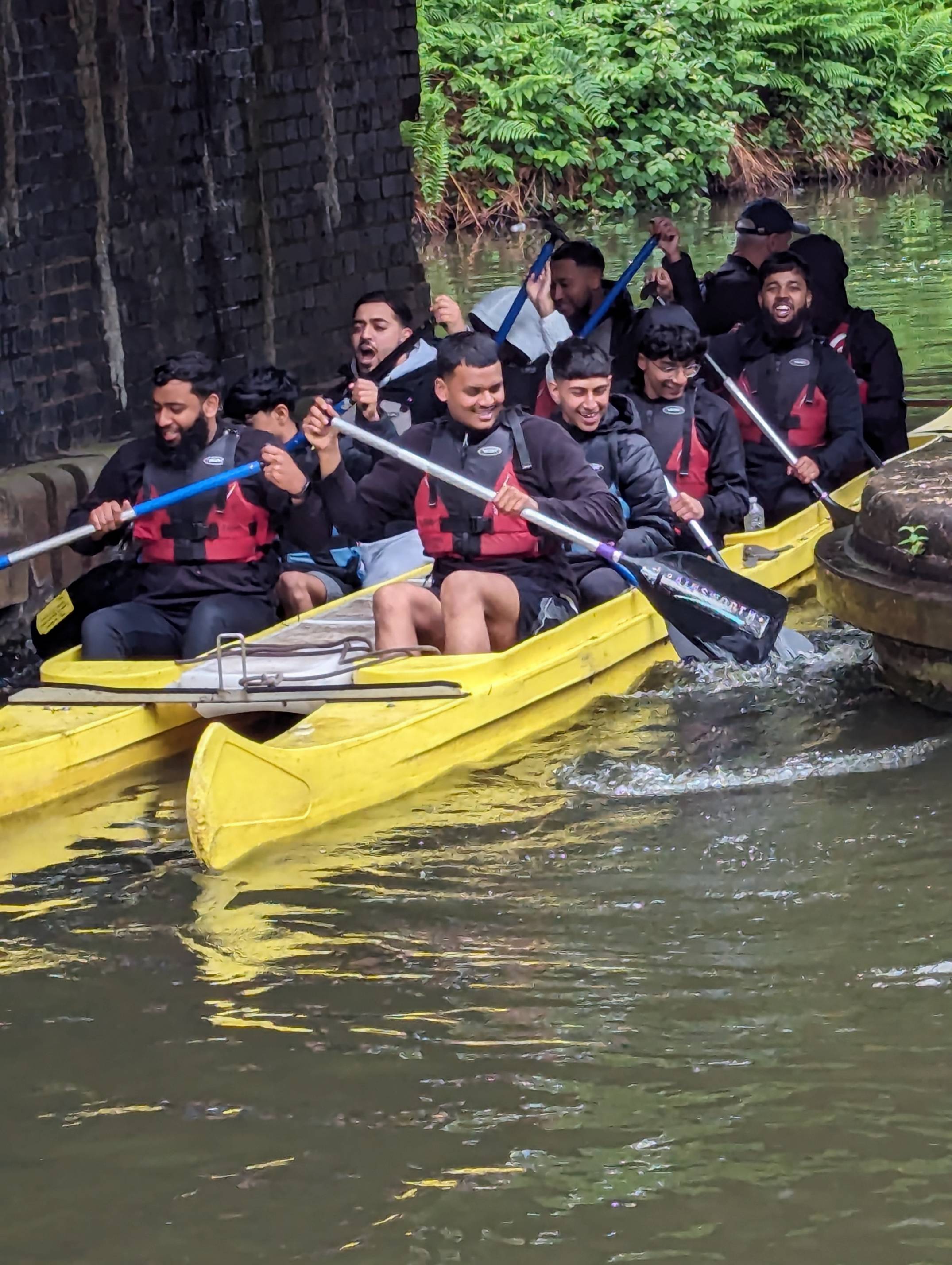
Community Empowerment Fund 2024 'Be' youth group, Oldham.  

************************************************

CM 56: JOURNALISM - OUT NOW

In this issue: Ziauddin Sardar bemoans the loss of the BBC's integrity; Andrew Brown waxes lyrical about Claud Cockburn's brand of journalism; Shiv Visvanathan observes both democracy and journalism degrade together in India; Eric Walberg reflects on his days as a digital news junky; Muhammad Saad laments the Pakistani mainstream media's failure to cover the catastrophic 2025 floods in Panjab; Josef Linnhoff examines Muhammad Asad's journalism and journey to 1920s Palestine; Robin Yassin-Kassab comes to terms with fake news and post- truth narratives in an unrecognisable Syria; Saoussen Ben Cheikh highlights alternative media in the Middle East;

Boyd Tonkin gives the great Hrant Dink his due portrait; James Brooks pours his heart out over coverage of climate crisis; C Scott Jordan asks what is the future of journalism; Zain Sardar examines the ethics of journalism; Yahia Lababidi looks at the spiritual journalism of Carla Power; Khuda Bushq is appalled at the
demonisation of Zohran Mamdani by the American press; and our list of a dozen media outlets you should begin every day with!

Also in this issue: Shamim Miah dissects Anwar Ibrahim's Rethinking Ourselves; Leila Sansour observes the moral amnesia of western societies; Abdullah Geelah attempts to redesign mosques; short stories by Ibrahim N Abusharif and Hamida Riahi; poems by Wietske Merison and Saba Zahoor; M Yaqub Mirza's invaluable advice on halal investing; and Barnaby Rogerson remembers his friend Robert Irwin.

About Critical Muslim: A quarterly publication of ideas and issues showcasing groundbreaking thinking on Islam and what it means to be a Muslim in a rapidly changing, interconnected world. Each edition centres on a discrete theme, and contributions include reportage, academic analysis, cultural commentary, photography, poetry, and book reviews.

Free to Muslim Institute fellows.

About Critical Muslim: A quarterly publication of ideas and issues showcasing groundbreaking thinking on Islam and what it means to be a Muslim in a rapidly changing, interconnected world. Each edition centers on a discrete theme, and contributions include reportage, academic analysis, cultural commentary, photography, poetry, and book reviews.

Critical Muslim is edited by Ziauddin Sardar. To order this issue and subscriptions click here

info@musliminstitute.org  |  www.musliminstitute.org
Muslim Institute, 82 Tanner Street, London, SE1 3GN
Copyright © 2026 Muslim Institute, All rights reserved.

You are on our list because you have volunteered your email to us.


This email was sent to kardasalmir.islam@blogger.com
why did I get this?    unsubscribe from this list    update subscription preferences
Muslim Institute · 7-14 Great Dover Street · London, SE1 4YR · United Kingdom

No comments:

Post a Comment