Friday, February 13, 2026

£100,000 Community Empowerment Fund – Ramadan 2026 Launch

View this email in your browser

RAMADAN 2026


£100,000 Community Empowerment Fund

Ramadan 2026 Launch


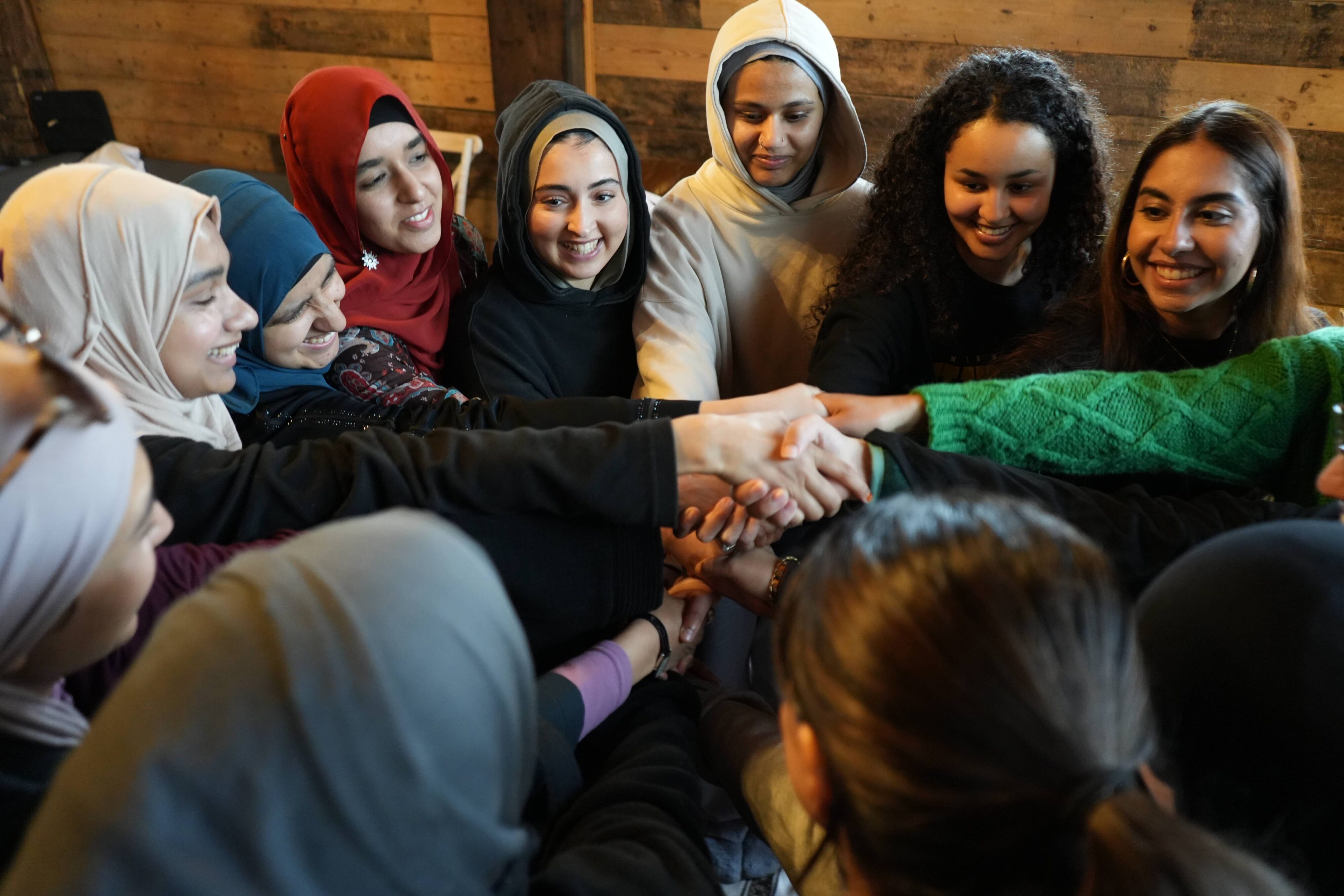
Community Empowerment Fund 2025 The Wholesome Retreat.


Established in 1973, the Muslim Institute has been an independent platform for Muslim thought, debate, and action in Britain. From the outset, it has considered ideas and ideals as inseparable from practice.

Alongside its intellectual work — including the Winter Gatherings, the Ibn Rushd and Ibn Sina lectures, and its quarterly journal Critical Muslim — the Institute has consistently engaged with the practical concerns of British Muslim life. It helped establish institutions that have shaped the community, such as the Muslim Parliament of Great Britain (1992), the Muslim Women's Institute (1991) and the Halal Food Authority (1994).

The Institute has always been willing to address difficult and sensitive issues within the community itself, including forced marriage, domestic violence, so-called 'honour' killings, and child abuse. Its Muslim Marriage Contract (2008), grounded in equality, and its Guideline Report on Child Protection in Faith-Based Environments (2006) reflect a long-standing commitment to dignity, justice, and accountability.

This combination of independent thought and practical engagement has always been central to the Institute's role. We firmly believe that a stronger, healthier and more engaged Muslim community can and will drive positive change and lift their fellow citizens locally and nationally.

In 2023, the Muslim Institute established the Community Empowerment Fund to support educational, research and capacity-building work addressing pressing issues facing British Muslim communities and wider society. Over £25,000 has been invested to date. The Fund sits alongside the Institute's wider activities, helping to resource areas of concern that have long been part of its mission to advance knowledge, informed debate and intellectual engagement.

From 2026, the Institute will allocate a budget of £100,000 to its Community Empowerment Fund. This will be distributed over the next 3–5 years.

We wish to fund educational, research and capacity-building initiatives in three interconnected areas where deeper understanding and informed public engagement are needed: community wellbeing, supporting young people, and defending civil liberties in British Muslim communities and wider society. Allocation will be dependent on our published criteria and the quality of applications.

Community wellbeing, supporting young people, and civil liberties are closely bound together: they highlight the need for communities to advance, to live healthy lives and with dignity, to be heard on their own terms, and to participate in society without fear. Each strand reinforces the others, helping to sustain the conditions in which interdependent, ethical and confident communities can thrive through the development and sharing of knowledge and informed public discussion.

The three strands.

Community Wellbeing: We will seek to support educational and community organisations working to advance understanding of mental health in areas with significant Muslim communities and in wider society. Projects should aim to deliver mental health education and stigma-reduction initiatives, including through engagement with mosques, women's projects and community associations to develop culturally competent and faith-literate approaches to care; Applications from female-led organisations and community groups will be particularly welcome. The Fund does not support the provision of direct clinical or therapeutic services.

Young People: We want to support individuals and organisations advancing the educational, intellectual and civic development of young people from our Muslim communities, particularly those from economically hard-pressed areas and marginalized demographics, such as refugees. Many young people from Muslim backgrounds continue to struggle with a range of barriers and issues, including anti-Muslim bigotry and racism, economic injustice, social isolation, a fragile sense of self and well-being, and a lack of voice and representation in local, regional and national discourses. We want to help projects that provide educational programmes, leadership development, mentoring, and platforms advancing youth voices that help young people discuss and respond to the challenges they face.

Civil Liberties: We will work with UK-based individuals and organisations seeking to uphold civil liberties, human rights and international law, and the right to hold power to account through education and informed public discussion benefiting British Muslim communities and wider society. This may include forums for informed debate, practical workshops, educational and institutional support and working with legal and civil society partners. Where appropriate, support may be provided through the Community Empowerment Fund. The Fund will not support party-political campaigning and all supported activities must remain independent, balanced and educational in character.

What's next: In the spring of 2026 the Muslim Institute will publish more details about the criteria for each stream of funds, the process by which we will decide awards and how the Community Empowerment Fund will be distributed. All funded projects will be required to demonstrate a clear and identifiable public benefit. Please do not contact us with any proposals at this stage.

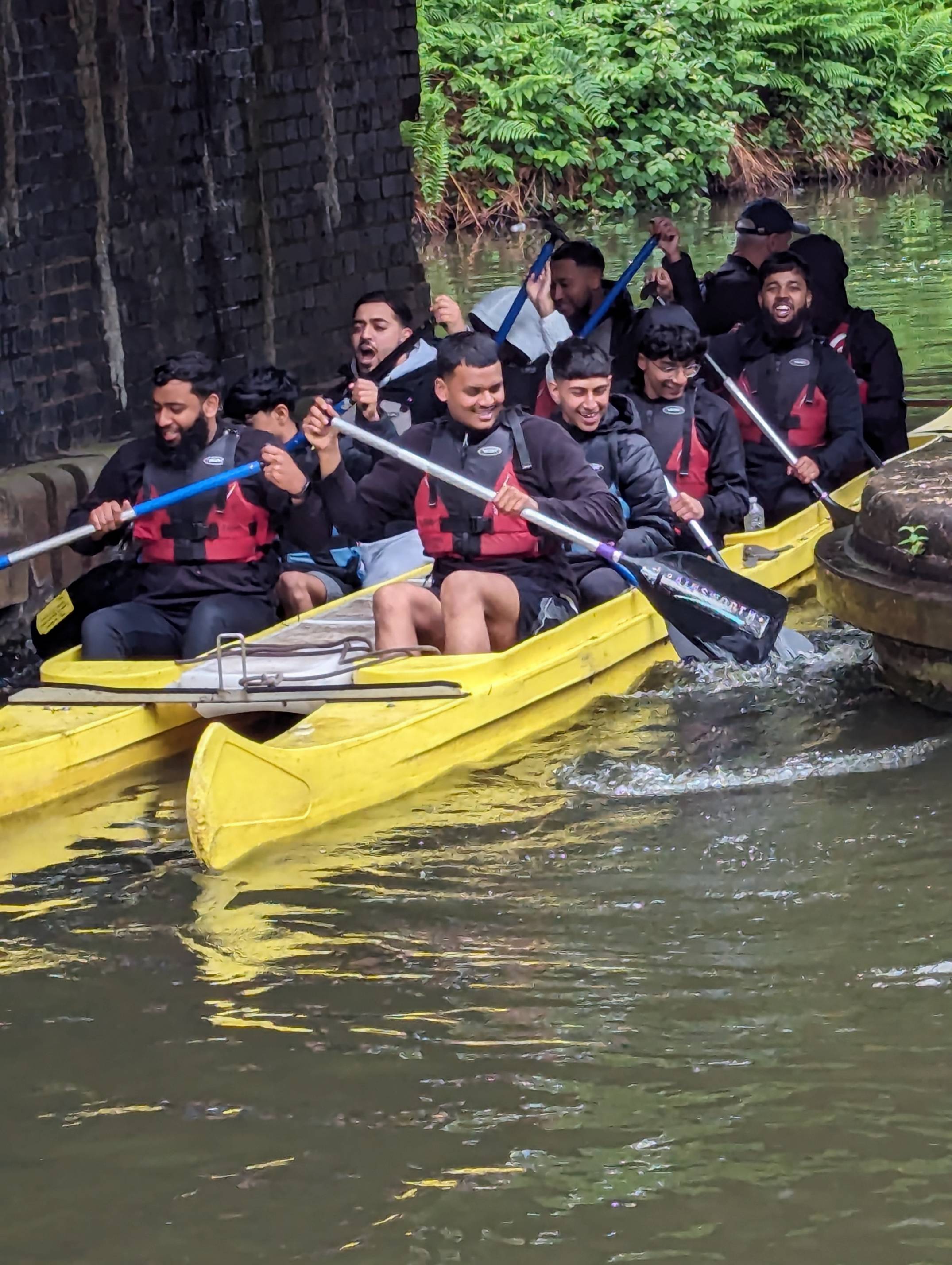
Community Empowerment Fund 2024 'Be' youth group, Oldham.  

*******************************************

Date for your diary:
The 2026 Winter Gathering will take place on Friday 27th to Sunday 29th November 2026 at Sarum College, Salisbury. The theme for this year's residential will be announced shortly.

*******************************************
Previous Events:

Watch: Video summary of the Muslim Institute Community Empowerment Fund 2025: 'The Wholesome Retreat'.

Watch the Muslim Institute 2025 Winter Gathering at Sarum College, Salisbury on 28-30 November 2025.  The theme of this Winter Gathering was: 'By Any Means Necessary': Muslims, Politics and Power in the 21st Century'. The FULL VIDEO PLAYLIST can now be viewed on YouTube. Click Here.

Watch the 10th Annual Ibn Rushd Lecture: 'On the Margins: The Life and Contribution of Muhamad Asad' held on 30 July 2025

Watch the Second Ibn Sina Lecture: Modern Medicine and the Legacy of Ibn Sina held in Bradford City Hall on 31 May 2025 and view the photos here.

Watch the 9th Annual Ibn Rushd Lecture: The History of Muslim Women in Britain held in July 2024, the Inaugural Annual Ibn Sina Lecture held in April 2024 at Leeds Civic Hall, and the book launch held in March 2024 of the new ground-breaking The Qur'an: A Verse Translation.

Muslim Institute Book Club: 'The Post-9/11 Great American Novel'


A Muslim Institute online series of events.

In The Post-9/11 Great American Novel Book Club. Dr Sheheryar B. Sheikh examines novels written after 9/11. 

In December 2001, two months after the terrorist attack on the United States, the American novelist Don DeLillo urged American writers to create "the counternarrative" that would reclaim control of culture in a call for nation-rebuilding fiction. This rallying call echoes John William de Forest's original post-Civil War coinage of the term and concept of the "Great American Novel." But whereas the original focus of criticism for the so-called Great American Novels was the American Dream, in the post-9/11 era the writers playing into the tropes of the concept are dealing almost exclusively with one issue: the place of Muslims and Islam in the developed world.

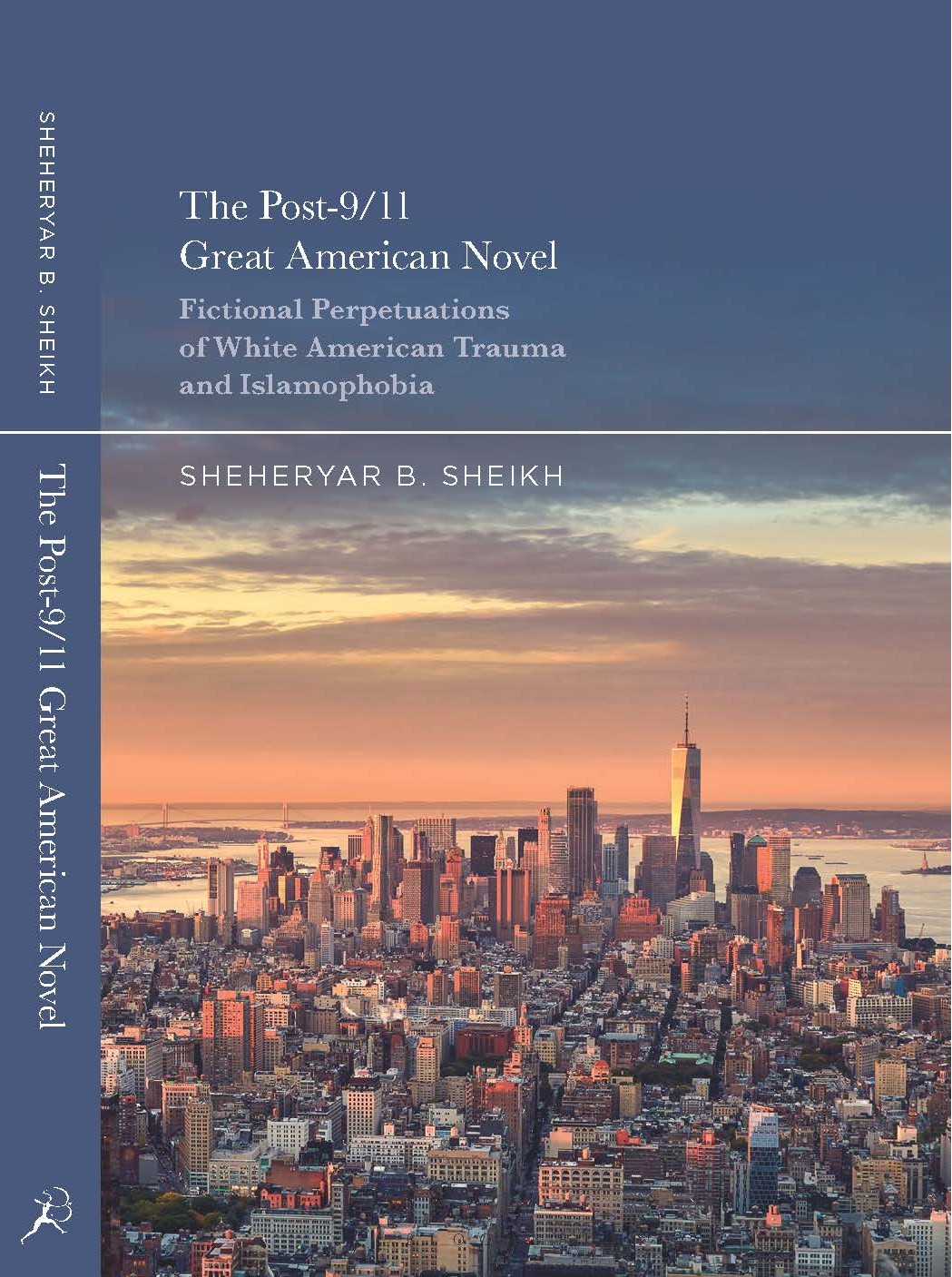
In his book, The Post-9/11 Great American Novel, Sheheryar B. Sheikh re-examines four seminal novels written after and about the terrorist attack. By analyzing the mechanisms repression, appropriation, adversarial othering, and enforced secularization as they appear in Jonathan Safran Foer's Extremely Loud & Incredibly Close, John Updike's Terrorist, Don DeLillo's Falling Man, and Amy Waldman's The Submission, this study shows the iterations of "solutions" and the abandonment of the "American" ideals by traumatized white liberals.

For the Muslim Institute Dr. Sheikh will conduct a series of online book club sessions to discuss these books and the ideas and literary and real world implications that flow from them.

Each session will be 75 minutes long, with the first minutes allocated to Dr. Sheikh explaining the relevant chapter's structure and scope, and the second half devoted to discussion and Q&A. 

Each person who signs up will have access to The Post-9/11 Great American Novel: Fictional Perpetuations of White American Trauma and Islamophobia by Sheheryar B. Sheikh.

Note: The monograph's electronic copy is being provided for fair use and no-distribution to attendees of this book club. While it is not necessary to read the four novels being analyzed (adequate summaries are provided in the monograph), it will add dimensions to the discussion if participants have read the works.

The Sessions:

Wednesday 25th March 2026 7pm GMT. Introduction: Dr. Sheikh will provide a brief talk on the introduction of his monograph, focusing on the concepts of the "Great American Novel" and what he has termed "the Muslim Question". Followed by general discussion.

Wednesday 8th April 2026 7pm GMT. The second session will focus on an examination of repression found in Jonathan Safran Foer's Extremely Loud & Incredibly Close, and the second is a study of appropriations and textual seizures in Don DeLillo's Falling Man.

Wednesday 22nd April 2026 7pm GMT. The third session will examine John Updike's Terrorist and Amy Waldman's The Submission. These texts center on 'what should be done about' Muslims once they enter public life in post-9/11 America.

Wedneday 29th April 2026 7pm GMT. Final session: The last session will be a gathering point on our literray journey across thde landscape of early post 9/11 literature. We will examine trends in post-9/11 literature that has been produced since the first-decade novels and the implications of fictional discourse produced by European, non-white American, and Muslim voices have contributed to the discourse in meaningful ways.

You can sign up to the Post 9/11 Novel book club via Eventbrite here

Biography.

Sheheryar Sheikh is a 2023 PhD graduate from the University of Saskatchewan. He has published two acclaimed novels with HarperCollins India. He is currently a Donald Hill Family Postdoctoral Fellow at Dalhousie University in Halifax, NS, where he is working on several projects, including a third novel on father-son relationships, a set of short stories about immigrant women, and a world-building set of novellas, short stories, and vignettes set in an ecumenopolis or world-city set five hundred years from now. And he is presenting with this book club series his just-published monograph, The Post-9/11 Great American Novel (Bloomsbury Academic 2025).

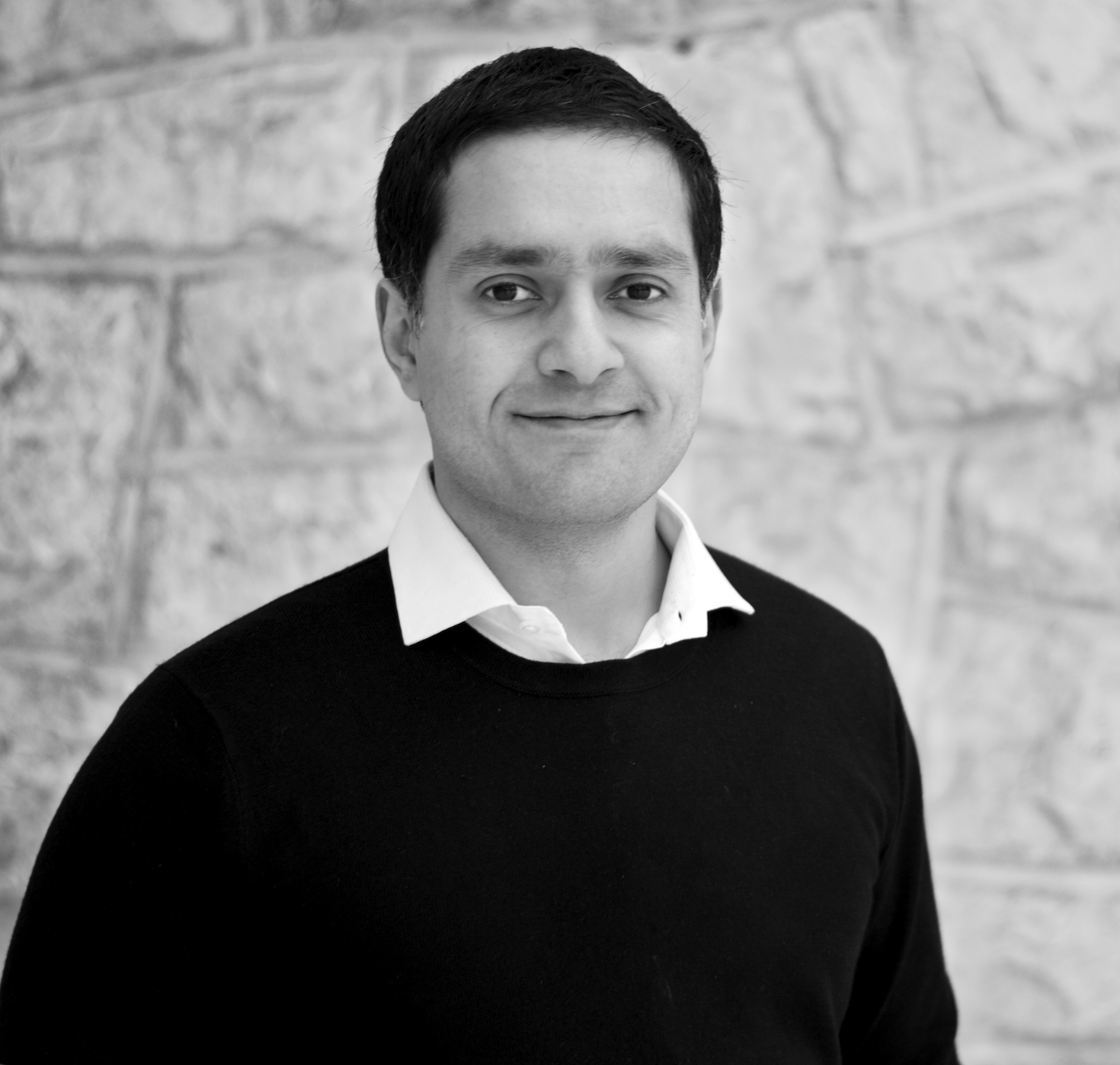
Dr Sheheryar Sheikh

CM 56: JOURNALISM - OUT NOW

In this issue: Ziauddin Sardar bemoans the loss of the BBC's integrity; Andrew Brown waxes lyrical about Claud Cockburn's brand of journalism; Shiv Visvanathan observes both democracy and journalism degrade together in India; Eric Walberg reflects on his days as a digital news junky; Muhammad Saad laments the Pakistani mainstream media's failure to cover the catastrophic 2025 floods in Panjab; Josef Linnhoff examines Muhammad Asad's journalism and journey to 1920s Palestine; Robin Yassin-Kassab comes to terms with fake news and post- truth narratives in an unrecognisable Syria; Saoussen Ben Cheikh highlights alternative media in the Middle East;

Boyd Tonkin gives the great Hrant Dink his due portrait; James Brooks pours his heart out over coverage of climate crisis; C Scott Jordan asks what is the future of journalism; Zain Sardar examines the ethics of journalism; Yahia Lababidi looks at the spiritual journalism of Carla Power; Khuda Bushq is appalled at the
demonisation of Zohran Mamdani by the American press; and our list of a dozen media outlets you should begin every day with!

Also in this issue: Shamim Miah dissects Anwar Ibrahim's Rethinking Ourselves; Leila Sansour observes the moral amnesia of western societies; Abdullah Geelah attempts to redesign mosques; short stories by Ibrahim N Abusharif and Hamida Riahi; poems by Wietske Merison and Saba Zahoor; M Yaqub Mirza's invaluable advice on halal investing; and Barnaby Rogerson remembers his friend Robert Irwin.

About Critical Muslim: A quarterly publication of ideas and issues showcasing groundbreaking thinking on Islam and what it means to be a Muslim in a rapidly changing, interconnected world. Each edition centres on a discrete theme, and contributions include reportage, academic analysis, cultural commentary, photography, poetry, and book reviews.

Free to Muslim Institute fellows.

About Critical Muslim: A quarterly publication of ideas and issues showcasing groundbreaking thinking on Islam and what it means to be a Muslim in a rapidly changing, interconnected world. Each edition centers on a discrete theme, and contributions include reportage, academic analysis, cultural commentary, photography, poetry, and book reviews.

Critical Muslim is edited by Ziauddin Sardar. To order this issue and subscriptions click here

info@musliminstitute.org  |  www.musliminstitute.org
Muslim Institute, 82 Tanner Street, London, SE1 3GN
Copyright © 2026 Muslim Institute, All rights reserved.

You are on our list because you have volunteered your email to us.


This email was sent to kardasalmir.islam@blogger.com
why did I get this?    unsubscribe from this list    update subscription preferences
Muslim Institute · 7-14 Great Dover Street · London, SE1 4YR · United Kingdom

No comments:

Post a Comment